
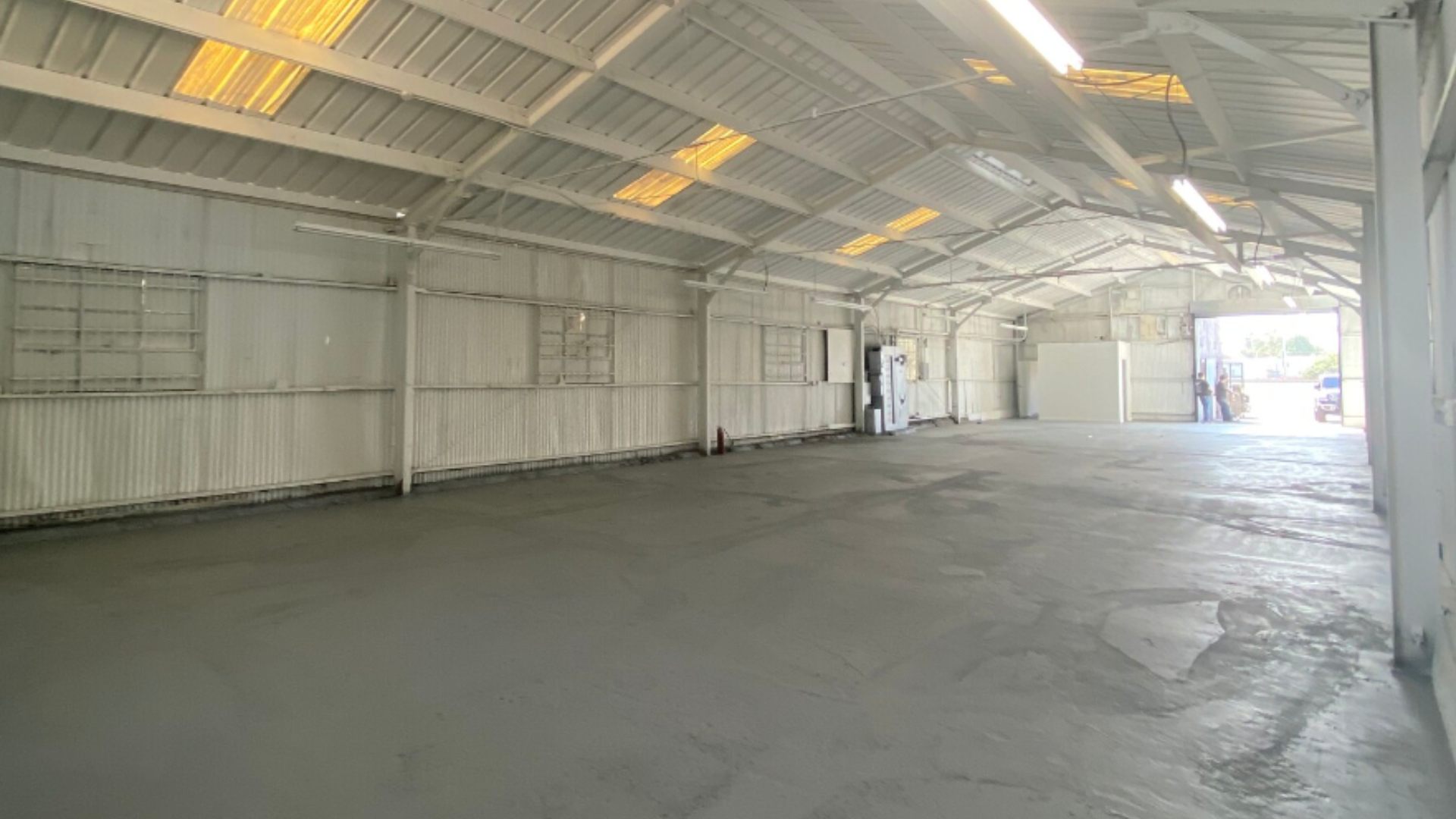
The advertised rent on a warehouse listing is the easiest number to compare and the least useful one on its own. What a business actually pays to occupy industrial space in Los Angeles includes base rent, operating expenses, utilities, insurance, whatever maintenance the lease assigns to the tenant, the cost of getting the building ready, and the cost of moving in.
Two properties with the same square footage can carry very different total costs depending on how the lease is structured, what condition the building is in, where it sits, and what the tenant is on the hook for. Working through those categories before signing tends to produce a more honest budget and a better comparison between buildings.
Start With the Base Warehouse Rent
Base rent is the amount charged for occupying the property before anything else is added. It’s the first number most businesses look at, and it should stay in the picture, just not as the whole picture.
Rent varies with location, building size, condition, layout, loading, ceiling height, parking, and access. A building near a major freeway or inside a dense commercial district will often be priced differently than a comparable one a few miles away in a quieter part of the Los Angeles market.
A lower base rate doesn’t guarantee a lower total cost once taxes, maintenance, utilities, and insurance are accounted for, and a higher stated rent sometimes comes with a more predictable structure. The comparison that matters is total financial responsibility, not the headline number.
Understand How the Lease Structure Affects Total Cost
Industrial leases come in a few common structures, and the terminology trips up plenty of first-time tenants. In a triple net lease, usually written NNN, the tenant pays base rent plus some combination of property taxes, insurance, and operating or common area costs, depending on the agreement. A gross lease folds more of those expenses into the rent, though what’s included still varies from one lease to the next.
Davood Brothers leases its Los Angeles industrial properties on a Full Service, Industrial Gross basis, which means maintenance, repairs, and utilities are built into the base rent with no CAM charges and no hidden fees. How our leasing process works explains what that covers before you tour a property. Whatever the lease type, the label matters less than the fine print. Read the agreement for exactly which expenses land on the tenant.
Factor in Operating Expenses and Common Area Costs
Under lease structures that pass operating expenses through to tenants, those expenses can add up. They may cover landscaping, exterior lighting, shared parking, property insurance, taxes, security, or general upkeep of common areas, and on some properties they show up as a separate common area maintenance charge, or CAM charge, on top of rent.
How CAM is calculated depends on how the property is managed, and it’s one of the harder line items to predict from year to year. A building that looks cheaper on base rent can end up costing more once CAM is added, so ask for a clear breakdown of what’s in the rent and what gets billed separately.
Davood Brothers’ Industrial Gross leases don’t add CAM charges on top of base rent, which takes one of the least predictable line items off the table for tenants trying to budget.
Budget for Utilities Based on How the Warehouse Will Be Used
Utility costs depend on what happens inside the building. A dry storage operation may use little electricity and water. A manufacturer running machinery, a food business with refrigeration, or a distributor with a lot of lighting and office space will use far more.
Electricity is usually the biggest question for industrial users, both whether the building’s service can handle the equipment and what running that equipment will cost each month. HVAC, water, gas, internet, and waste disposal belong in the estimate too. Build the utility budget from your actual operation rather than a generic per-square-foot figure.
Include Insurance in the Occupancy Budget
Nearly every commercial lease requires the tenant to carry insurance, and commercial general liability is the usual baseline. Depending on the operation, businesses may also need coverage for inventory, equipment, business interruption, or vehicles.
A company storing low-value materials and a distributor carrying a large inventory have very different exposure, and their premiums will reflect that. Review the lease’s insurance requirements with your insurance professional before you commit to a building, so the premium is a known cost rather than a surprise.
Determine Who Is Responsible for Maintenance and Repairs
Maintenance obligations are where a cheap lease can quietly become an expensive one. Some leases keep major systems on the property owner. Others hand the tenant responsibility for HVAC, plumbing, electrical, roll-up doors, loading equipment, or the roof.
If a lower rent comes with responsibility for the building’s major systems, the math changes the first time one of them fails. The building’s condition at move-in matters for the same reason. A well-maintained warehouse is less likely to disrupt operations or hit the tenant with improvement costs right after the keys change hands.
Plan for Improvements, Equipment, and Build-Out Costs
Not every warehouse is move-in ready. Office improvements, added lighting, electrical work, security systems, and internet infrastructure are common needs, and the cost depends on the business and on where the building starts.
The building is also only part of a working warehouse. Take an e-commerce company moving into a taller building than its last one. The extra clear height is a real advantage, but only after buying racking tall enough to use it and a forklift that can reach the top level. That’s a real cost, and one that’s easy to leave out of the lease comparison.
Identify these requirements during the search, not after signing. A building that already fits the operation can be the cheaper choice even at a higher rent, once you count what the cheaper building would need before it’s usable.
Account for Moving and Relocation Expenses
Moving a warehouse operation is more than hiring movers. Inventory, shelving, machinery, forklifts, office furniture, and IT equipment all have to get from one building to the other, and operations often have to slow down or run on a careful schedule while that happens.
There’s usually a stretch where rent is being paid on both facilities. For a distributor with thousands of units on hand and orders still going out, or a manufacturer that needs specialized movers to disconnect and reinstall machinery, that stretch can be weeks. None of this is part of the monthly rent, and all of it belongs in the leasing budget.
Evaluate Location, Transportation, and Site Requirements
Location affects cost in ways that don’t show up on the lease. A building close to customers, suppliers, freeways, ports, or distribution routes saves driver hours and fuel. One that isn’t costs both, every day, and in Los Angeles traffic the difference between two addresses a few miles apart can be larger than it looks on a map.
Vernon, Commerce, Huntington Park, South Gate, South Los Angeles, Santa Fe Springs, and City of Industry each have their own logistical advantages depending on where goods need to go. A lower-rent building in the wrong corridor may cost more once transportation is added.
The site itself matters too. Contractors need parking for work trucks and equipment. Logistics companies need room to stage trucks. Distributors need exterior space for frequent deliveries. A building with enough square footage inside but not enough room outside can push a business into paying for off-site space, which is one more line item to catch early.
Allow Room for Business Growth
Budgeting tightly around today’s operation creates problems if the business grows during the lease term. A warehouse running near capacity on day one leaves no room for more inventory, more staff, or more shipping volume. The opposite mistake, paying for space in the hope of growing into it, is just as real.
The honest answer is a projection. If inventory has been climbing steadily, some extra storage and packing room is probably worth it. If the operation has been stable for years, it probably isn’t. The right budget balances what’s affordable now against what the business is realistically likely to need before the lease ends.
Frequently Asked Questions
Are utilities normally included in a Los Angeles warehouse lease?
It depends on the lease and the property. Some gross lease structures include them; many leases require the tenant to set up and pay for utilities separately. Confirm which services are included before signing.
What are CAM charges in a warehouse lease?
CAM stands for common area maintenance. On properties that charge it, CAM covers shared areas and property operations and is billed on top of base rent, so ask how it’s calculated and whether it’s included in the stated rent. Davood Brothers’ Full Service, Industrial Gross leases don’t include a separate CAM charge.
Should I choose a warehouse based on price per square foot?
It’s a useful starting point for comparisons, but it doesn’t show the full cost of occupancy. Lease structure, utilities, maintenance responsibilities, transportation, and the building’s condition all move the real number.
How much extra warehouse space should a growing business budget for?
There’s no universal percentage. Look at expected inventory growth, staffing, equipment, and distribution volume over the lease term. Some extra capacity is often worth it; paying for a lot of empty space rarely is.
Can a more expensive warehouse actually reduce business costs?
Yes, sometimes. A better location, a more efficient layout, better loading access, enough parking, or a more predictable lease structure can lower other operating expenses by more than the rent difference. Compare the total financial picture of each property, not just the rent.
Budgeting for the Right Warehouse in Los Angeles
Warehouse rent is one line in a larger operating budget. Lease structure, utilities, insurance, maintenance, build-out, equipment, moving, and transportation all belong in the same calculation, and the building that supports the operation best while keeping those costs predictable is usually the better deal, even when it isn’t the cheapest listing.
At Davood Brothers, we help businesses throughout Los Angeles evaluate industrial warehouses and commercial properties based on how they operate, where they need to be, and where they’re headed. With Full Service, Industrial Gross leasing, no CAM charges, and responsive property management, the goal is space that makes sense operationally and financially.
If your business is evaluating warehouse space for lease in Los Angeles, contact Davood Brothers to discuss available properties and schedule a tour of spaces that fit your current requirements and future plans.
Call us at (323) 327-0207 or visit www.DavoodBrothers.com to learn more.